automation

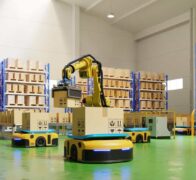
Robot-Based Assembly Automation in Mid-Sized Companies

Robot-Based Assembly Automation in Mid-Sized Companies

Obstacles, drivers and implications
Aaron Zinßer, Fabian Diefenbach ORCID Icon, Arik Lämmle ORCID Icon
Production automation is well established in large companies for high volume products. But robot-based assembly automation in mid-sized companies is still in its infancy. This study uses results from 19 expert interviews and a survey to identify obstacles to and drivers of automation in this field. Among the obstacles is the low flexibility of the robotic systems. One driver for automation is the increasing shortage of skilled workers. Based on the empirical findings, the study proposes options to increase the use of automation.
Industrie 4.0 Management | Volume 39 | 2023 | Edition 4 | Pages 21-24 | DOI 10.30844/IM_23-4_21-24
Sustainable and Intelligent Additive Manufacturing

Sustainable and Intelligent Additive Manufacturing

Early Recognition of Manufacturing Defects in 3D-Printing with Artificial Intelligence
Kai Scherer ORCID Icon, Sebastian Bast ORCID Icon, Julien Murach, Stephan Didas, Guido Dartmann, Michael Wahl
Additive manufacturing is an increasingly important manufacturing technology with huge economical potential. However, its popularity is accompanied by high material and time losses, as defects are often detected at a very late stage. One solution for a more sustainable production is the automated detection of manufacturing defects using artificial intelligence. This article describes the digitization of the defect detection process in additive manufacturing using a system based on a neural network. In addition to the steps for automated defect detection, system performance is also discussed.
Industrie 4.0 Management | Volume 39 | 2023 | Edition 2 | Pages 56-59
Robotic Process Automation (RPA) in Lieu of a New ERP System

Robotic Process Automation (RPA) in Lieu of a New ERP System

The reality behind the hype
Norbert Gronau ORCID Icon, Benedict Bender, Clementine Bertheau, Hannah Lauppe
Robotic Process Automation (RPA) stands for the software-supported operation of software solutions via their user interface. The primary goal that RPA seeks to achieve is the automated execution of routine tasks that previously required human intervention. However, the potential of RPA to improve processes in the long term is very limited. Automating processes and bridging front-end media disruptions leads to a variety of dependencies and conditions, which are summarized in this article. The path to a sustainable enterprise architecture (and the processes and systems comprised therein) requires open, adaptive systems with modern architecture that are characterized by a high degree of interoperability at various levels.
Industry 4.0 Science | Volume 39 | 2023 | Edition 1 | Pages 120-125 | DOI 10.30844/I4SE.23.1.120
Container Terminal Automation − Success Factors for the Management of Straddle Carrier Automation

Container Terminal Automation − Success Factors for the Management of Straddle Carrier Automation

Erfolgsfaktoren für das Management der Automatisierung von Straddle Carriern
Sebastian Eberlein, Stephan Oelker, Serge Jacovis, Vanessa Beckmann, Michael Freitag ORCID Icon
Efficiency in container terminal operations is key for competitiveness. Many large German terminals use the flexible but relatively risk-laden manned straddle carriers (SCs). The research project STRADegy evaluated the reliability and profitability of automated SCs in northern-German container terminals via a combination of a pilot installation and an emulation at the container terminal in Wilhelmshaven. Parallel to that, rollout-guidelines were developed. This paper introduces central results regarding a successful rollout of auto-SC-systems.
Industrie 4.0 Management | Volume 37 | 2021 | Edition 6 | Pages 6-10
The Path from Automation to Autonomy

The Path from Automation to Autonomy

Evolutionary Steps of a Fully Autonomous Logistics Process in Manufacturing Companies
Benjamin Nitsche, Tobias Marc Wringe, Frank Straube
The automation of informational logistics processes is already one of the core challenges of manufacturing firms on their way to autonomous logistics systems. It is quite realistic that the majority of informational logistics processes will be running autonomously by the end of this decade. However, the path to this goal is still uncertain. Therefore, this article aims at defining the evolutionary stages of autonomy of logistics processes with the involvement of industry experts, describing prerequisites for reaching individual stages and discussing challenges along the way. In addition, the most important informational logistics processes with high autonomization potential are identified and an estimate is made of when the autonomy levels can be expected to be reached industry-wide.
Industrie 4.0 Management | Volume 37 | 2021 | Edition 6 | Pages 15-19
Industry 4.0 in Remanufacturing

Industry 4.0 in Remanufacturing

Analysis and evaluation of current research approaches
Kim Sprenger, Jan-Felix Klein, Marco Wurster, Nicole Stricker, Gisela Lanza ORCID Icon, Kai Furmans
Remanufacturing, previously characterized by manual and cost-intensive processes, is a critical step on the way to a resource-efficient circular economy. Industry and research agree that the introduction of Industry 4.0 technologies is the key to the development of automated and economical remanufacturing systems. Based on a systematic literature review, this paper is dedicated to the analysis of promising Industry 4.0 approaches with a focus on the overall process as well as the sub-processes of disassembly and inspection. The results suggest that there is a need for additional knowledge, experience and research in the development and real demonstration of the approaches and their transferability to broader application fields.
Industrie 4.0 Management | Volume 37 | 2021 | Edition 4 | Pages 37-40 | DOI 10.30844/I40M_21-4_S37-40
Smart Factory

Smart Factory

Reducing lead time in toolmaking by 90%
Christian Ludwig, Hilmar Gensert, Thomas Farrenkopf, Thomas Panske
Smart Factory is the vision of a production environment in which manufacturing plants and logistics systems organize themselves as far as possible without human intervention. The article describes a project, at the start of which none of the participants created a relation to “Smart Factory” or “Industry 4.0”. Rather, the objective was to drastically reduce the current delivery time of 6-8 weeks. The result is a completely digitized business process from order creation, product development, design, manufacturing as well as processing for “batch size 1” with a reduction in lead time to less than 10 %.
Industrie 4.0 Management | Volume 37 | 2021 | Edition 4 | Pages 29-33 | DOI 10.30844/I40M_21-4_S29-33
Necessary Further Developments for the Success of Industry 4.0

Necessary Further Developments for the Success of Industry 4.0

Dirk Schmalzried
Based on known deficits, the article recommends measures for a successful realization of the concept Industry 4.0 on the levels “Business”, “Functional” and “Information” of the RAMI-4.0-Framework. The technical foundations to meet the expectations of Industry 4.0 and Smart Manufacturing are in place; a correction of the named deficits in the near future seems realistic.
Industrie 4.0 Management | Volume 36 | 2020 | Edition 5 | Pages 58-62
The Loop of Cognition

The Loop of Cognition

How “intelligence” is constellated on a silicon basis
Claus Riehle, Thorsten Pötter, Thomas Steckenreiter
In process engineering, one thinks of production operations that are controlled or regulated by sensors and actuators. And any realization of matter transformation is based on a physical substratum, which holds equally for living systems and their behaviour. The article distinguishes between three system levels: the functional level, the interface to the environment and the cognitive level of. Using these three levels, the learning cycle or the previous Cognitive Loop can be very well illustrated. If one compares with this way of distinction the Bio-Informatization of human intelligence with the technical development stages of mechanization, automation, regulation and deep learning, then the cybernetic-sociological term “operational closure” becomes understandable. It becomes obvious that in the context of a digitized culture of production and organization, we should be prepared for a new kind of cognitive loop based on silicon (SI), an intelligent system behavior via ...
Industrie 4.0 Management | Volume 36 | 2020 | Edition 2 | Pages 52-56 | DOI 10.30844/I40M_20-2_S52-56
Automation of Container Terminals

Automation of Container Terminals

Concept for the Design of a Pilot Installation and Emulation-Based Evaluation of Scalability
Sebastian Eberlein, Stephan Oelker, Joy Schumacher, Michael Freitag ORCID Icon
German sea and inland ports are of outstanding importance for Germany as a base for manufacturing and logistics. In the last decades, the port sector underwent several structural changes. Currently, the expected autonomation and digitalization of the entire supply chain create entirely new challenges for the port industry. In this context, the present article describes a planning approach for the development of an automated straddle carrier in northern German seaports. To evaluate both the reliability and the profitability of such an automated system, a planning approach, consisting of two fundamental steps, was chosen: (1) At first, in order to perform prototypical experiments, a pilot installation will be established in the area of the container terminal in Wilhelmshaven (CTW). (2) Based on this, the system’s suitability for the operative conditions in a mega container terminal is evaluated using a simulation and emulationbased planning approach.
Industrie 4.0 Management | Volume 34 | 2018 | Edition 6 | Pages 25-29
1 2 3